http://www.pbs.org/black-culture/explore/civil-rights-movement/#.WWQ6PoTyvIV
http://isreview.org/issue/77/haitis-humanitarian-crisis
http://www.wsws.org/en/articles/2017/07/10/hamb-j10.html
http://www.wsws.org/en/articles/2017/07/07/pers-j07.html
http://www.kolumnmagazine.com/2016/08/24/black-wall-street-brought-life-john-legend-tika-sumpter/
http://www.history.com/topics/1960s
http://atlantablackstar.com/2014/10/14/10-things-black-people-know-white-people-yet-accepted/?utm_source=fb&utm_medium=kw&kwp_0=302890&kwp_4=1540752&kwp_1=669115
Monday, July 10, 2017

Sunday, July 09, 2017
Harlem
http://artsedge.kennedy-center.org/interactives/harlem/faces/herbert_white.html
http://www.brownbeautyprofile.com/blog-1/2015/2/4/why-josephine-baker-is-a-perfect-example-of-a-brown-beauty
http://blackgirllonghair.com/2015/10/the-black-women-of-the-harlem-renaissance/
https://www.pinterest.com/pin/170081323400654658/
https://prezi.com/kzefkagar4sl/harlem-renaissance-dancers/
http://historyoftheharlemrenaissance.weebly.com/dancers.html
http://truthseeker2473.blogspot.com/2017/07/economic-issues.html
http://slideplayer.com/slide/10114845/
http://www.brownbeautyprofile.com/blog-1/2015/2/4/why-josephine-baker-is-a-perfect-example-of-a-brown-beauty
http://blackgirllonghair.com/2015/10/the-black-women-of-the-harlem-renaissance/
https://www.pinterest.com/pin/170081323400654658/
https://prezi.com/kzefkagar4sl/harlem-renaissance-dancers/
http://historyoftheharlemrenaissance.weebly.com/dancers.html
http://truthseeker2473.blogspot.com/2017/07/economic-issues.html
http://slideplayer.com/slide/10114845/
Monday, June 26, 2017
Monday, June 19, 2017
Tuesday, June 06, 2017
Research
Sunday, June 04, 2017
More News in 2017
http://www.blackpast.org/aah/brown-willa-b-1906-1992
http://therewm.com/2014/08/18/photos-of-african-american-women-world-war-ii/
https://www.army.mil/africanamericans/timeline.html
http://www.historyplace.com/unitedstates/aframerwar/
http://heavy.com/news/2017/06/bill-maher-racism-history-n-word-controversial-videos-muslims/
https://www.mca-marines.org/leatherneck/gallery/first-african-american-marines-enlist
http://www.kolumnmagazine.com/2017/05/11/6-black-explorers-will-transform-see-ancient-world-atlanta-black-star/
http://writingcities.com/2016/08/13/barbara-ransby-ella-baker-the-yncl-and-naacp/
http://thenewjournalandguide.com/2017/04/13/part-one-remembering-black-history-norfolk-naval-base-turns-100/
https://www.theguardian.com/us-news/2017/jan/03/the-obama-years-timeline-of-a-presidency
Saturday, May 27, 2017
President John F. Kennedy (100 Years after his Birth)

President John F. Kennedy (100 Years after his Birth)
Now, we witness 100 years after the birth of John Fitzgerald Kennedy. He was a very intelligent man whose idealism was indicative of the idealism of the youth. For decades, people have discussed about his life. Many skilled authors have written about his life in countless books, and scholars have evaluated his Presidency in a diversity of ways. Today, in our generation, it is time to show the truth about him as a man, as a President, as a father, and as a military veteran. His life begins in Massachusetts. He was born in May 29, 1917 in Brookline, Massachusetts. He was part of a large family. He was the second child to nine children. John F. Kennedy's father was the banker Joseph Kennedy and his wife was Rose Fitzgerald. Rose was the daughter of the former mayor of Boston, who was ironically named John F. Fitzgerald. President John F. Kennedy was an Irish Roman Catholic. He loved his Irish heritage and that inspired his journey while he was physically on this Earth on many ways. Even in his early years, he suffered many illnesses. Back then, few people knew about his serious diseases and sicknesses. He had scarlet fever. He was even close to death in Boston City Hospital. The Last Rites were given, but he survived and recovered. His father Joseph Kennedy worked in investment banking by 1920 and he was in the shipbuilding business. In that year, he bought an estate in Brookline at 51 Abbotsford Road. JFK was in kindergarten at the age of 5 and then he was promoted to the first grade at Edward Devotion School by 1922. He went with his older brother Joseph Jr. to Noble and Greenough Lower School. JFK faced taunts from others in the school for being Irish Catholic. He was challenged in fights. Ironically, Joe Kennedy formed a committee to buy the school. It is renamed the Dexter School. By November 1925, Robert F. Kennedy (or his younger brother) was born. By 1927, Joseph Kennedy goes into the movie business. The family goes into Riverdale, NY. JFK comes into the Riverdale County School or a private school for boys. By 1929-131, John F. Kennedy moved into the NYC suburb of Bronxville.


More on his Early Life
Later, John F. Kennedy went into the Cantebury School in New Milford Connecticut. By April of 1931, he has an appendectomy and recuperates. He graduated from the Choate School in Wallingford, CT in June of 1935. He has colitis. He enrolled in Harvard College. From 1939-1940, he improved his academic performance. He writes his senior thesis. It evolved into the book, “Why England Slept.” The book is about Hitler and criticizing Britain for not taking sufficient steps to prevent World War II. During that time, Joseph Kennedy supported the appeasement policy of the UK's Neville Chamberlain. It is no secret that Joseph Kennedy throughout his life have made anti-Semitic remarks. According to Harvey Klemmer, who served as one of Kennedy's embassy aides, Kennedy habitually referred to Jewish people in racial slurs. Joseph Kennedy uses Henry Luce (a famous media leader) and Arthur Krock to help send the book nationwide. JFK graduated from Harvard in 1940. Why England Slept sold 80,000 copies back then. John F. Kennedy soon studies business in Stanford. He is hospitalized again for weight loss and back problems in Boston later. He tours South America to check on the Nazi influence in the confinement on May 1941.


World War II
His older brother, Joseph Kennedy Jr. enlisted in the Navy. JFK also enlists, so he dropped his plans to go to Yale Law. His father allowed him to join despite his physical ailments. In October 1941, he reported for duty at the Office of Naval Intelligence in Washington, D.C. He becomes a lieutenant and trains in torpedo boats in Rhode Island. He commanded the PT 101 in Florida and at the Panama Canal. In 1943, John F. Kennedy is transferred to the Solomon Islands. In that location, he took command of the PT 109. By August 2, 1943, at 2 am., PT 109 was rammed by the Japanese destroyer Amagiri. PT 109 caught on fire. It was cut in half. 2 men died in the explosion. Some debate whether the ramming was accidental or deliberate. From August 3-8, 1943, Kennedy helped the 10 survivors. He tugged a wounded soldier 4 miles to Plum Pudding Island. They swam another mile to Olasana Island since it was barren. 2 Australian scouts rescued them. They carried a message where Kennedy carved on a coconut shell to the allied base at Rendova Island. By the end of 1943, he commands PT 59. It was gunboat. He was awarded the Navy and Marine Corps Medal including the Purple Heart. In 1944, he was in the hospital for a ruptured disc in his spine. He had abdominal pain and he had malaria. Joseph Jr. (or his older brother) was killed in England when a drone plane full of explosives he is piloting blows up prematurely. John F. Kennedy was discharged from the military on March 1, 1945. He also visited the Potsdam Conference at the end of World War II.

His Life in the House of Representatives
When Michael Curley campaigned for the mayor Boston, JFK ran for Curley’s congressional seat as Curley left his seat open. Joseph Kennedy funds Curley’s Democratic campaign. JFK runs as a Democrat. In April 23, 1946, John F. Kennedy runs for Congress. He wins the Congressional election on November 5. He moves to D.C. as a House member. In January of 1947, House minority whip John McCormick appointed John F. Kennedy to both the Education and Labor and the District of Columbia committees. He voted against the final passage of the anti-union Taft Hartley bill. He opposed corrupt lobbying. He supported the Housing Act. He is totally anti-Communist by wanting to solely back the Nationalist instead of Trump desiring a coalition government in China. In 1950, he supported home rule in Washington, D.C. Home rule is about giving more independent political power in D.C. From October to November 1951, John F. Kennedy toured Indochina (or Vietnam back then). He met with the State Department official Edmund Bullion. He told JFK in Saigon that France will not win the war since Ho Chi Minh had won the hearts and minds of the Vietnamese youth. He was right as the French was defeated by the Vietnamese people. Bobby Kennedy said that the meeting had a “very, very major” impact on JFK’s thinking. This is why JFK would later support African and Asian nationalists when he became President. On November 14, 1951, John F. Kennedy sent a letter to his voters. In that letter, he criticized Dean Acheson’s State Department for aiding the effort of a French regime that is promoting empire. In November 14, 1951, John F. Kennedy mentioned the following words:
“Southeast Asia is an area of human conflict between civilizations striving to be born and those desperately trying to retain what they had held for so long; in which the fires of nationalism so long dormant have been kindled and are now ablaze. Here, colonialism is not a topic for tea-talk discussion; it is the daily fare of millions of men.”
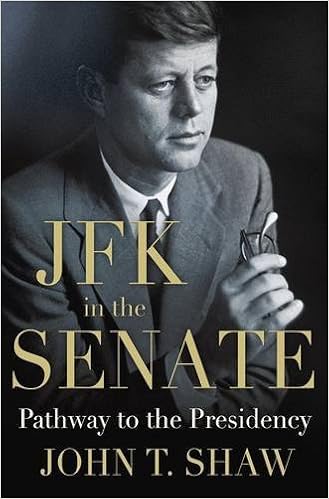

His Life in the Senate
By 1952, Kennedy said that he will run for the senate seat of Henry Cabot Lodge. He defeated Lodge in November of 1952 with 51.5% of the vote. JFK is appointed to the Labor and Public Welfare and Government Operations committees. From 1953 to 1960, John F. Kennedy is in the Senate of the United States Congress. In 1953, he sent Secretary of State John Foster Dulles a 44 question letter. That letter wants to question American involvement in Indochina. He later wants to promote a plan to develop the New England economy. His plan has a higher minimum wage, low cost energy plans, and job retraining. He proposed later over 300 bills to implement this plan. On September 12, 1953, John F. Kennedy married Jacqueline Bouvier in Newport, Rhode Island. In April of 1954, then Senator Kennedy said that the French can’t defeat the Vietnamese when they are opposed by the people in that region. He voted for the St. Lawrence Seaway project too in that year. That project established many canals to carry cargo from the Great Lakes area to the Atlantic Ocean. The imperialist French were defeated by the Vietnamese in May 7, 1954 in Dien Bien Phu. Eisenhower refused to agree with Foster Dulles’ request to use atomic weapons in Vietnam. The Dulles Brothers later form a CIA operation to create a government in Saigon to oppose Ho Chi Minh from unifying Vietnam. He had back surgeries in Boston in 1955. His famous book was Profiles in Courage which came out in 1956. It was created by his hands with research from Ted Sorenson. This book talked about eight senators who took on stands on issues in American history. It was very popular selling 2 million copies during that time. It won a Pulitzer Prize. In 1956, he supported Democratic presidential nominee Adlai Stevenson. Senator Estes Kefauver would be his vice Presidential candidate of the Stevenson campaign. JFK was almost a Vice Presidential candidate during that time. Kennedy gave speeches that wanted people to realize the forces of nationalism in the Third World. Stevenson wires him to not any more speeches in his campaign. By 1957, JFK and RFK would use the McClellan Commit e to investigate mob infiltration in labor or union activities. RFK would target Jimmy Hoffa from the beginning.
In July of 1957, John F. Kennedy attacked the White House over America not wanting to force France out of the colonial war in Algeria. Many reactionaries hated the speech while many in Africa and other places of the world loved the speech. By September of 1957, JFK voted for the Civil Rights Act of 1957. He is disappointed that Title 3 (or the part of the law that allowed the attorney general to enter states and file lawsuits) was dropped. One of his greatest books was the pro-immigrant “A Nation of Immigrants” book. It was a great book. It has the introduction by Robert F. Kennedy. The book criticized the immigration quota system, which happened in 1921. The early 20th century quota system was not only xenophobic and racist. It was very cruel too. The quota system was eliminated in the 1965 Immigration Act, which is a law that I do agree with. In 1960, John F. Kennedy announced in the Senate Caucus Room that he will be a candidate for the Presidency of the United States of America. He defeated Hubert Humphrey in the Democratic primaries. He selected Lyndon Johnson from Texas as his vice President. He accepts the nomination in Los Angeles and he runs for President. On August 2, 1960, Senator John F. Kennedy gave a long and eloquent speech in the Senate to desire a higher minimum wage and expand its scope. He fights for unemployment insurance. During the campaign, many issues come up. One was about his religion as some believed that him being Catholic would cause the Presidency to be bounded under the authority of the Pope. JFK made it clear that he believes in the separation of church and state and told many Baptists in 1960 (in Houston, Texas) that no religious authority would dictate to him any political policy. Also, he debated Richard Nixon multiple times. He debated him first in Chicago. JFK look youthful while Nixon looked tired after heavy campaign. The televised debate caused many people to vote for JFK. Also, Kennedy set up arrangements to free Dr. King from prison in Georgia. Coretta Scott King was happy to see Dr. King out of jail. This caused a large number of African Americans to vote for John F. Kennedy too. In November 8, 1960, John F. Kennedy won the 1960 Presidential election against Vice President Richard Nixon. He won by about 113,000 votes. This was a margin of 303 to 219 in the Electoral College. Harris Wofford is JFK’s civil rights advisor. In December 30, 1960, Wofford submits his memorandum to advise on how Kennedy would do in terms of achieving civil rights for African Americans. On January 17, 1961, Prime Minister Patrice Lumumba of the Congo was murdered in Katanga. The CIA kept this fact from Kennedy in the beginning. The CIA supported those who killed Lumumba. Kennedy favored Lumumba’s leadership.

The Beginning of his Presidency
The Kennedy Presidency started in 1961. He was inaugurated as President on January 20, 1961 in Washington, D.C. He gave a historic speech that wanted peace and desired to confront Communism overseas. He started an affirmative action program since he believed that there weren’t enough African Americans in that day’s ceremony. In other words, he invented the modern affirmative action system in America (which was before Nixon and before LBJ). The next day, Robert Kennedy is confirmed as Attorney General. JFK told Robert Kennedy to use lawsuits in the South to attack voting discrimination. On February 2, 1961, he wanted an UN force to establish peace in the Congo (along with releasing all political prisoners). He doesn’t know that Lumumba was killed. When he learned of Lumumba’s death via Ambassador Adlai Stevenson in the United Nations, he was sad about it. On March 6, 1961, John F. Kennedy signed an executive order to end discrimination in government employee hiring and contracting. The law would evolve into the Equal Employment Opportunity Commission. On March 15, Kennedy appointed 2 seats to the Civil Rights Commission and a new staff director (since people resigned). The commission became more progressive. In March 20, 1961, the Kennedy administration interceded in the New Orleans School District desegregation case in the behalf of the integrationist Judge J. Skelly Wright. He later appointed Judge Wright to the D.C. Court of Appeals.
On April 12, 1961, there was talk about a U.S. operation against Cuba shown in the press. The Bay of Pigs Operation plans existed before JFK was inaugurated. The CIA planned it as early as 1960 during the Eisenhower administration. The Bay of Pigs invasion happened from April 17-20, 1961. Back in April 12, Kennedy pledged no American troops under any conditions will intervene in Cuba. On April 16, and with Kennedy’s knowledge, the Bay of Pigs assault forces leaves Guatemala. JFK doesn’t exercise his option to cancel within 24 hours of departure. On April 19, the amphibious force was defeated by the Cuban pro-Castro forces on the beach of Playa Giron. The Pentagon asked for American intervention with jet fighters. Kennedy refusds. So, Cuba remained under Castro’s control for decades into the future. This causes a widening of tensions among the intelligence community and JFK for the rest of his life. They (both JFK and the intelligence community) blame each other for the failure of the invasion. JFK takes responsible for the failure as he’s the President. Behind the scenes, Kennedy has more distrust of the CIA because of obvious reasons. JFK believed that the CIA lied to him about its chances of success. He privately commissions a White House study to see what went wrong. The CIA does the same thing. John F. Kennedy continued to have distrust of the CIA.
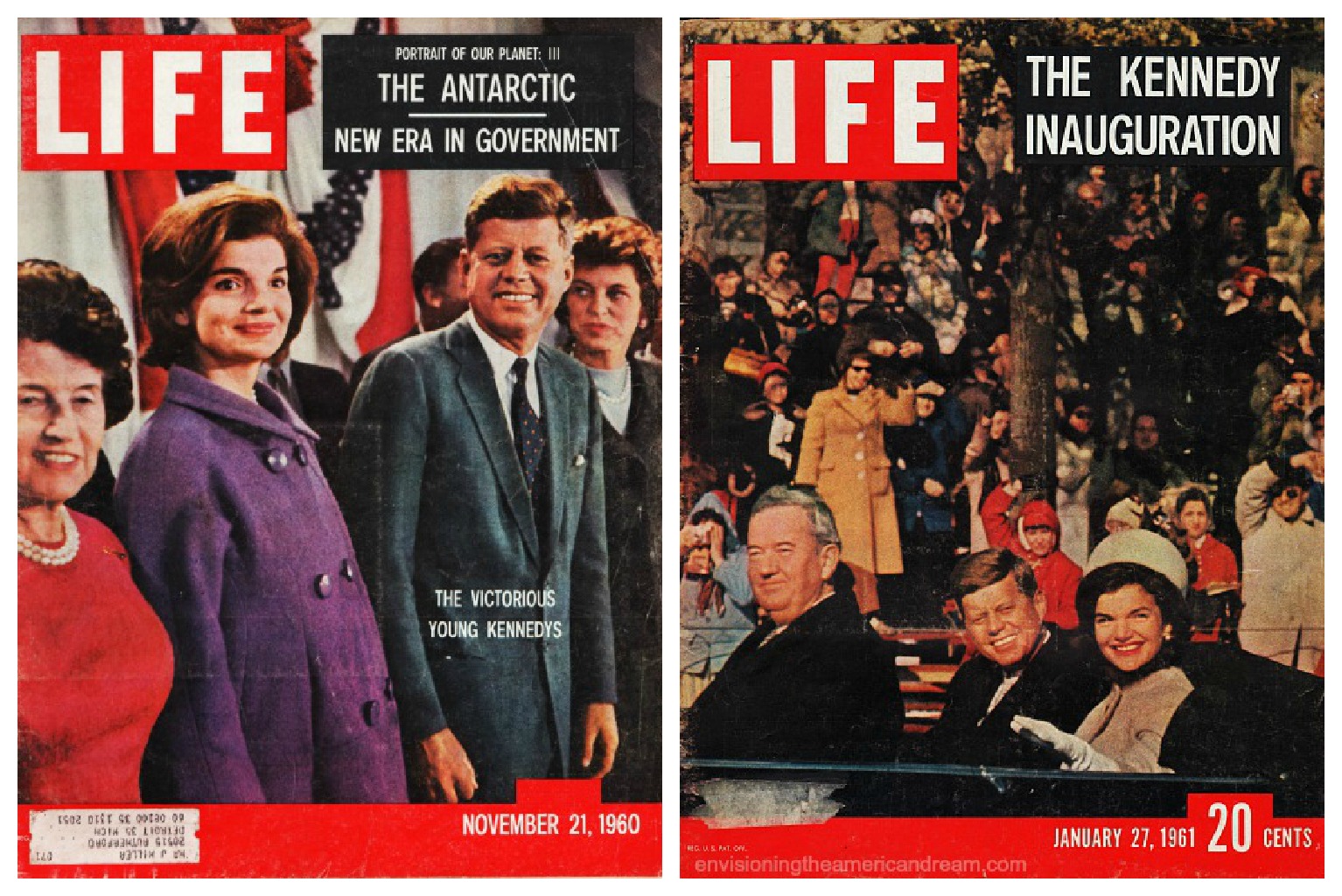
President John F. Kennedy believes in space exploration. On May 7, 1961, astronaut Alan Shepard was the first American to achieve human spaceflight. By May 25, John F. Kennedy gave a speech which wanted a big space exploration program. He wanted man to go to the moon. He wanted a Rover nuclear rocket, weather satellites and other space projects. On May 14, 1961, Freedom Riders come into Anniston and then Montgomery, Alabama. They wanted to enforce existing law regarding integration of interstate bus travel. They were pulled off buses and beaten up with baseball bats and other objects. The governor double crossed the President. The FBI did nothing to stop this. So, Kennedy sent in 500 U.S. Marshals to rescue them. Many civil rights leaders back then criticized the Kennedy administration for taking a piecemeal approach as it relates to civil rights. By 1963, JFK would take more militant steps on addressing civil rights issues. On May 29, Kennedy wired all embassies abroad. He wants all decisions to be done by the ambassador in nations as it relates to U.S. policy not the CIA. The Vienna summit between President John F. Kennedy and Khrushchev started in June 4, 1961. The Russian leader Nikita Khrushchev wanted Berlin to be part of East Germany. He sees at first JFK as a young, inexperienced man. By 1963, both men would gain better respect for each other. By July 20, 1961, the CIA and the Pentagon wanted JFK to use a first strike nuclear attack on Russia during the fall of 1963. JFK asks a few questions and walks out. He opposes this extremist policy. He told Dean Rusk, “And we call ourselves the human race.”
The Cold War gets more heated when East Germany closed its border with West Berlin. The construction of the Berlin Wall starts on August 14. John F. Kennedy on August 17 had a plan to extend loans and aid to Latin America. This was the Alliance for Progress program, which was signed in Punta del Este, Uruguay. The Peace Corps Act was passed by the House in September of 1961. JFK would sign the bill. Sargent Shriver was the Peace Corps first Director. He was Kennedy’s brother in law. The Peace Corps would use men and women to help many human beings worldwide, especially in the Third World. In late September 1961, the UN leader Dag Hammarskjold is killed when his plane was sabotaged. JFK called him the greatest statesman of the 20th century. He wanted to continue the policies of an independent, neutral Congo and freeing West Irian from the Netherlands. On September 22, 1961 (with the urging of RFK), the Interstate Commerce Commission passed laws to integrate all travel facilities. The enforcement of the law by the end of 1962 existed. The Freedom Riders earned a victory. John F. Kennedy on September 25, 1961 issued his famous address to the United Nations. In it, JFK urged the U.N. to not forsake Hammarskjold’s mission in Congo. Edmund Gullion goes to Congo as Kennedy’s ambassador. On October 16, 1961, important events transpire. On that time, Lyman Kirkpatrick finished the CIA report on the Bay of Pigs. This report and General Maxwell Taylor’s White House report caused President John F. Kennedy to do something. Kennedy asks for the resignations of Director of the CIA Allen Dulles, his deputy Charles Cabell, and Director of Plans Dick Bissell. This angered many people, especially members of the CIA. Dulles, Cabell, and Bissell are in essence fired by JFK. On October 28, 1961, U.S. and Soviet tanks face each other at Brandenburg Gate in Gate over the rights of a diplomatic passage through the wall. Kennedy and Khrushchev negotiate a solution through proxies. Kennedy concluded that, “Better a wall than a war.” This comment angered anti-Communist extremists once again. On November 2, 1961, discussions and debates about Vietnam erupt. Maxwell Taylor and Walt Rostow on that time return from Vietnam. They recommend Kennedy to commit combat troops to the conflict. On November 21, on a secret mission to Saigon, India Ambassador John K. Galbraith wrote to JFK that there should be no more U.S. involvement (and he should plan to withdraw). On November 22, 1961, during a two week debate, Kennedy blocked all attempts to commit troops to Vietnam. He signs NSAM 111, which sends 15,000 advisors instead. To keep it real, “advisors” is code for some military “advising” of South Vietnamese forces.


1962
1962 would be a year of transformative changes during the Kennedy Presidency. On January 17, 1962, JFK signed a law that granted federal employees the right to form unions and bargain collectively. Over 1.2 million federal employees in 1967 would join unions. The idea does expand to local and state governments. On February 2, Ted Shackley moves to the Miami CIA state to supervise Operation Mongoose. Operation Mongoose was the program that the CIA and others wanted to attack and eliminate Castro in Cuba. On February 10, Kennedy arranged an exchange of Soviet spy Rudolph Abel for U2 pilot Gary Powers in Berlin by James Donovan. Kennedy signed the Manpower Development and Training Act in March 15, 1962. This law will try to aim to alleviate African American unemployment. By the fall of 1967, almost 350,000 persons were retrained and over 90 percent will get jobs within a year. On March 16, 1962, the Pentagon proposed Operation Northwoods to Kennedy. Operation Northwoods wanted false flag operations to be executed by the U.S. government as a pretext for an American invasion of Cuba. JFK rejected this reckless plan outright. On March 17, 1962, Fred Shuttlesworth, Frank Dukes, and students from Miles College in Birmingham started a department store boycott. This would grow into a yearlong campaign that would be joined by Dr. Martin Luther King Jr. and others. The Birmingham movement would have a big involvement by JFK and RFK by 1963.
On April 4, 1962, President John F. Kennedy gave Defense Secretary Robert McNamara John Kenneth Galbraith’s report recommending withdrawal from Vietnam. From that moment on, McNamara became JFK’s agent for his withdrawal plan. On April 11, in a televised address, Kennedy attacked the steel companies for breaking a deal that he had brokered between them and the union not to raise their prices. After RFK issued subpoenas, steel companies capitulated in 72 hours. On June 7, President John F. Kennedy announced that he will move for a tax cut to increase demand and stop a recession. Walter Heller and James Tobin are his Keynesian advisors. They agree to a capital investment plan after the tax cut to ratchet up the economy. On July 2, 1962, the CIA pilot Allen Pope is released from Indonesian house arrest by Sukarno at the request of Robert Kennedy. On July 6, David Rockefeller and JFK exchange letters in Life magazine on differing views of the economy. The politeness masks deep divisions among both men. By July 17, 1962, John F. Kennedy’s Medicare bill is defeated by a combination of the AMA and Senator Robert Kerr. On the day of his assassination, Kennedy was working with Rep. Wilbur Mills to bring the bill back. On July 23, the Laos neutralization plan was signed in Geneva. This was about ending the conflict in Laos. Kennedy wanted this though it allows infiltration by North Vietnamese troops into the south. On July 25, and on McNamara’s orders, the Joint Chiefs of under the pacific command prepare a phased withdrawal from Vietnam which would conclude in 1965. On August 15, 1962, Robert Kennedy and Ellsworth Bunker created the New York Agreement that turns over West Irian to Indonesia. On September 30, Governor Ross Barnett and General Edwin Walker provoke a riot by white racists over the admittance of the African American James Meredith at Ole Miss. Two people were killed and 27 people were shot. So, President John F. Kennedy sent in hundreds of marshals and regular army troop to quell the violence.
The Cuban Missile Crisis happens in October of 1962. This was when John F. Kennedy learnt that the USSR sent ICBMs into Cuba. This 13 day nuclear crisis ended with an accepted offer by Khrushchev to remove missiles from Cuba if JFK withdraws NATO missiles from Turkey and Italy. This once again causes many in the intelligence community to be angry at John F. Kennedy, because JFK promoted a solution not war mongering involving the Cuban Missile Crisis. By October 31, 1962, Operation Mongoose is placed on hiatus and is formally disbanded by next month. On October 20, China invades India. Kennedy started to send a massive weapons airlift to help Nehru. He also agrees to send an aircraft career fleet. China ends the invasion the day after this decision was made. On November 16, the Programs for Fair Practices agreement was signed by 116 unions to end discrimination in membership and apprenticeship programs. On November 20, 1962, Kennedy signed an executive order that prohibited discrimination in sales and rental for housing. On December 11, 1962, Khrushchev wrote a letter to President Kennedy. This starts the push for détente by Kennedy and Khrushchev. Pope John XXIII wanted détente too including the author Norman Cousins. On December 21, attorney James Donovan negotiates the release of Bay of Pigs prisoners from Cuba for $53 million in food and medicine. By December 29, 1962, President John F. Kennedy approved the U.S. participation in Grand Slam, the UN military mission to stop the Belgian and British goal of separating Katanga from Congo. This achieves its aim when the separation movement ends by the end of January of 1963.


1963 and the End of his Presidency
The year of 1963 was the most important year of the Kennedy Presidency. It represented a new era and the end of JFK’s longevity. On January 2, 1963, near the Mekong River, the Battle of Ap Bac started. In that battle, the South Vietnamese had more men, air support, and American advisors. Yet, South Vietnam lost that battle. This would convince many people that South Vietnam couldn’t win without American combat troops (which I disagree with). It caused others to desire to end the war once and for all. On January 26, James Donovan was ready to return to America from Cuba. Donovan was approached by Castro physician Rene Vallejo. He told Donovan that Cuba was interested in talking about re-establishing relations with Washington. On May 6, 1963, the eighth Secretary/Defense meeting took place in Hawaii. McNamara was part of it. There were plans for withdrawal that Kennedy ordered the year before they were submitted. The Kennedy administration stated that schedules were too slow and must be speed up. On May 10, after direct intervention by the White House, there is an agreement in Birmingham which includes integration, hiring practices, and the creation of a committee on both matters. Yet, reform would be slow in Birmingham. President John F. Kennedy gave his historic American University commencement address on June 10, 1963. It has been called the peace speech. The speech wanted peace in the world, détente with Russia, and a better society. People in America and in the USSR praised the speech as great and powerful. On June 11, Governor George Wallace brought in 825 state troops to block the entry of two African American students to the University of Alabama. Kennedy nationalized the Alabama National Guard afterwards to remove Wallace from blocking the front door. The University of Alabama now is integrated. RFK inspired JFK to give another historic speech on civil rights.
On June 11, 1963, President John F. Kennedy gave a speech where he advocated for equality and civil rights. He wanted a civil rights bill to be passed by Congress. This was the most direct Presidential civil rights speech in a long time. Dr. King sent JFK a telegram to praise the speech. Dr. Martin Luther King Jr. always wanted JFK to be more militant in advocating for civil rights and Kennedy changed to be more progressive by 1963. President John F. Kennedy sent his Civil Rights bill of 1963 to Congress on June 19. It would be a powerful bill and the first of its kind since 1875. The Civil Rights Act of 1964 would be signed into law by President Lyndon Baines Johnson. Also, on June 11, 1963, the press reported on how Buddhist monk Thich Quang Duc set himself on fire in Saigon. This was a protest against the regime of President Ngo Dinh Diem persecuting Buddhists based on their religion (and Diem’s anti-democratic policies in general). The sister in law of Diem, Madam Nhu, disrespected this event by calling it a “barbecue” and wanted volunteers to supply the gasoline for the next self-immolation. On July 1, 1963, President Kennedy visited Italy. He back l’apertura, which was an attempt to move the socialist party into the ruling Christian Democrats. In this act, JFK supported the socialist Party of Italy. This angered the media publisher Henry Luce and CIA counterintelligence chief James Angleton. On July 17, 1963, President John F. Kennedy tells the press that he will be supporting Dr. Martin Luther King’s March on Washington. He is the first President to support such a historic march in public. He assigned Bobby Kennedy to supervise. The problem was that JFK censored any speech in the march that criticized him and many of his plans tried to sugarcoat the powerful militancy of SNCC (which was involved in the March along with countless civil rights leaders and activists. The March was the dream of A. Philip Randolph being fulfilled finally).


On August 5, 1963, Russia, Great Britain, and America signed the Limited Atomic Test Ban Treaty in Moscow. Kennedy helped to get it passed by the Senate in a vote of 80-19 on September 23. The treaty was one of the greatest accomplishments of the Kennedy administration. It would ban above ground nuclear tests. 36 other nations would sign the agreement too. On August 28, 1963, Dr. Martin Luther King Jr. gave his eloquent, powerful “I Have a Dream” speech in the March on Washington. It was a speech that not only had hope for justice, but it criticized the current state of injustices that black Americans experienced. It was critical of the current political situation state wide and nationally and it desired a change. Dr. King, in his speech, criticized racism, segregation, police brutality, and economic oppression. Dr. Martin Luther King Jr. wanted all people to be free. Kennedy praised the speech. On September 20, Kennedy visited the United Nations to urge them to not abandon Congo. He convinced the UN to extend the peacekeeping mission for one year. On September 23, Kennedy asked for a cooperative venture to the moon with the USSR. This was part of the movement towards détente. On September 25, 1963, Kennedy’s tax cut bill passed the House under the Ways and Means Committee Chairman Wilbur Mills. In 1965, it will cut unemployment by 17% and boost GNP by over 20%. Yet, the capital improvements part is foregone. On October 1, in Hawaii, Kennedy substituted his own trip report (written in Washington) for McNamara and General Taylor’s report. He wanted to be sure that it forms the basis for his withdrawal plan. On October 4, Kennedy suspended diplomatic relations with the Dominican Republic until the military restore elected president Juan Bosch to power. On October 11, Kennedy approved of NSAM 263. This started his withdrawal plan with the removal of a thousand men from Vietnam by the end of 1963. On October 21, the Senate passed Kennedy’s Aid to Higher Education Act. This was the first education bill since 1945. LBJ would sign it on December 16, 1963. October 24, 1963 is the time when Kennedy met with journalist Jean Daniel before his trip to Cuba. JFK gives a long message to him to deliver to Castro. It is about the upcoming resumption of relations.
On October 31, and due to a tip by an informant named “Lee,” the Secret Service foiled an attempt to kill Kennedy in Chicago. Kennedy’s November 2 appearance is cancelled. On November 1, 1963, South Vietnamese generals, led by "Big Minh", overthrew the Diem government. The coup of Diem involved the arresting and then killing of Diem and Nhu (Nhu was Diem's brother. They died on November 2, 1963). Kennedy was shocked by the deaths. He found out afterwards that Minh had asked the CIA field office to secure safe-passage out of the country for Diem and Nhu, but was told that 24 hours were needed to procure a plane. Minh responded that he could not hold them that long. This was a turning point in the Vietnam War. By this time, 16,000 American troop “advisors” were in Vietnam. Those involved in the coup were South Vietnamese generals who opposed Diem. Conein and Lodge had sided with the generals (from South Vietnam who opposed Diem). There is no evidence that John F. Kennedy directly ordered the assassination order personally against Diem. He did approve of Cable 243 (the Kennedy administration was split into those who supported the coup and opposed it), but he never ordered the murder of Diem and his brother. Kennedy according to sources suspected that Ambassador Henry Cabot Lodge was involved in their deaths. He wanted to recall Lodge to Washington to fire him. Yet, John F. Kennedy was as assassinated in November 22, 1963.


Before leaving for Dallas, Kennedy told Michael Forrestal that "after the first of the year ... [he wanted] an in depth study of every possible option, including how to get out of there ... to review this whole thing from the bottom to the top." Just before his assassination, on November 18, JFK finalized a trip to Jakarta for 1964 to bolster the nationalist Sukarno and stop a confrontation with Malaysia. He came into Dallas in November of 1963 in order to mend political fences and to campaign for the upcoming 1964 Presidential election. The crowds in Dallas was large. He rode in a motorcade along with Secret Service members. The day was sunny. Soon, Kennedy was assassinated and the world mourns. The nation changed. LBJ became the new President and he takes a more militaristic tone involving the Vietnam War. After Kennedy's assassination, President Johnson passed NSAM 273 on November 26, 1963. It reversed Kennedy's decision to withdraw 1,000 troops, and reaffirmed the policy of assistance to the South Vietnamese. Jack Ruby killed Lee Harvey Oswald on national television on November 24, 1963. LBJ would support the Warren Commission Report (with members in it among those JFK fired or were members of Congress). President John F. Kennedy's legacy continues to influence the world today.

Epilogue
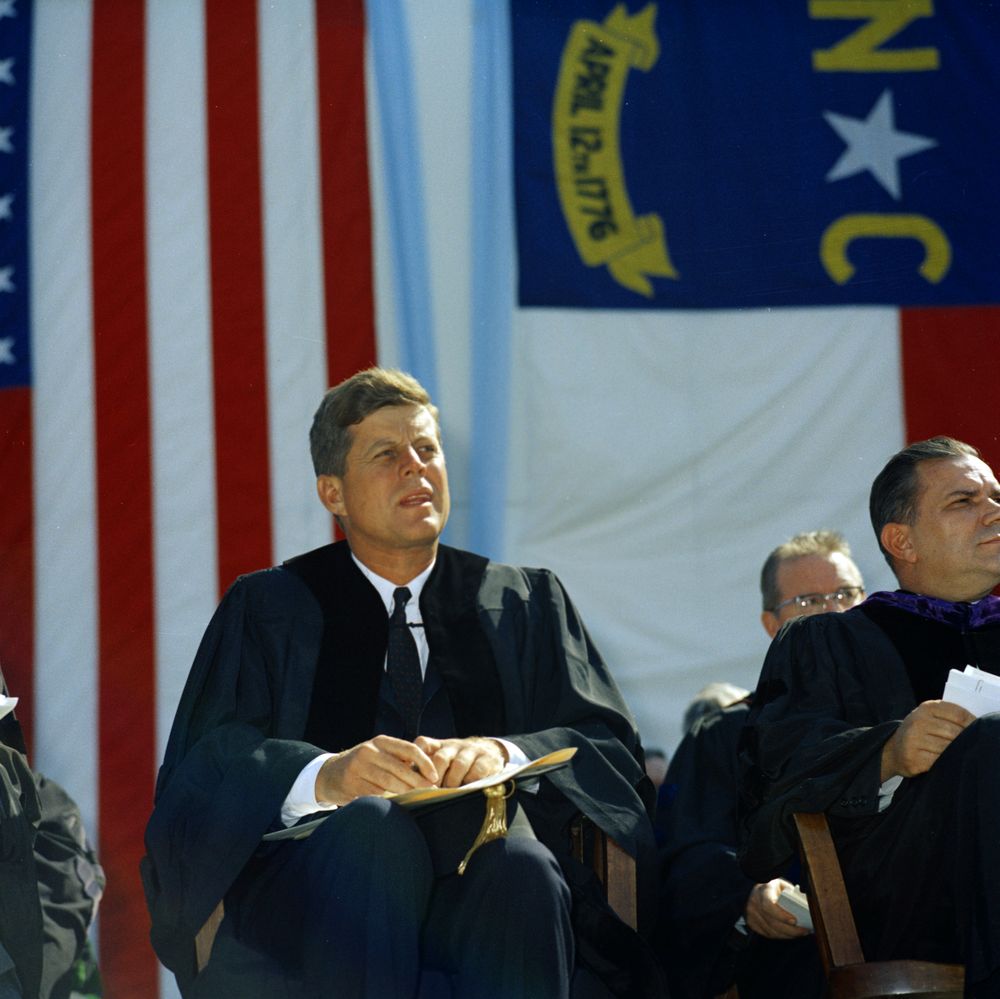
John F. Kennedy lived a very short life, but his life has been discussed for a long time. President John F. Kennedy represented the idealism of what America could be and he expressed that idealism with his eloquent speeches. After the 100 years after his birth, we live in a new generation which seeks justice, true equality, and tranquility for the human race. He lived during the era of the Cold War. For the early stage of his Presidency, he was a dedicated Cold War liberal. He spoke of militarist language. He supported investments in building up the American military (especially after the Berlin Crisis when he sent 1,500 U.S. troops to West Berlin. Khrushchev advocated the building of the Berlin Wall to stop East German workers to come into West Germany) and fallout shelters to be constructed nationwide in America even when America back then had an extremely more amount of nuclear weapons than the USSR. He funded covert U.S. military operations overseas which caused more violence in many other nations. He supported capitalism and had an hatred of Communism. The Cuban Missile Crisis changed him. He realized that reactionary generals (with their hatred of him and some of these generals had a paranoid anti-Communism) could promote war so badly that humanity could mostly be obliterated from the face of the Earth. Therefore, since the Cuban Missile Crisis, President John F. Kennedy took even more steps to advocate for the goal of detente with the Soviet Union. He would also set up a "hot line" telephone system with Khrushchev to keep communications open. President John F. Kennedy would promote peace as a solution in dealing with the Soviet Union. Many right wing people were angry with him over that. JFK wasn't perfect and he admitted his imperfections and the imperfections of America. He wanted America to reach its highest potential in terms of its goal to make freedom real. He had many enemies like: segregationists, right wing intelligence members, anti-Castro Cuban extremists, some Wall Street banking interests (who disagreed with his economic views), and other far right people. JFK persisted to outline his views and advance his agenda for the world. He created the 1962 Commission on the Status of Women to study how poverty and discrimination affected women. He advanced the Equal Pay Act in 1963 to require equal pay for equal work. JFK advocated for many social programs in Congress like an increased minimum wage, an extension of Social Security benefits, and improvements in the welfare system. In 1963, he became more engaged to advocate for the Civil Rights Act and more funding to help the poor and the working class. He traveled the country to give eloquent speeches on the beauty of the arts, on the importance of improving the environment, and to advocate for the enrichment of the human race (as outlined in his speech at Amherst College on the date of October 26th, 1963). In essence, President Kennedy matured as time went onward during his Presidency. He promoted a New Frontier, which has similarities to the New Deal. Many of his New Frontier proposals from universal health care for the elderly and civil rights would exist under the Great Society. President John F. Kennedy was a representation of the vision that many Americans had. We should use his life as inspiration for us to fight for a free, progressive society that we desire.
By Timothy
Saturday, April 08, 2017
Wednesday, April 05, 2017
Monday, April 03, 2017


The Birmingham Movement
The Birmingham movement was one of the most important parts of the Civil Rights Movement. Afterwards, the civil rights movement would be changed forever. Before that movement, there was little progress legislatively in America involving civil rights. Afterwards, the Civil Rights Act and the Voting Rights Act would be passed. Courage defined the efforts of African Americans and others who fought for the freedom of black people in America. Diverse organizations were involved in this campaign like the SCLC (the Southern Christian Leadership Conference), ACHMR (the Alabama Christian Movement for Human Rights), and SNCC. Dr. Martin Luther King Jr., Fred Shuttlesworth, Wyatt Tee Walker, Dorothy Cotton, and other human beings were involved in this audacious campaign. The goal of this campaign was explicitly clear of eliminating Jim Crow in Birmingham, Alabama (which was the most segregated large city of the South back then). This program was called Project C. The protests would involve lunch counter sit-ins, marches on City Hall, and boycotts on downtown merchants who promoted segregation. Months later, racist police used water hoses and police dogs (as sent by the racist person Bull Connor) to harm black men, black women, and black children. Those images were shown worldwide and it showed the hypocrisy of the American establishment and the vicious oppression that black people experienced in American society. This came after the failed SCLC campaign in Albany, Georgia. The Birmingham, Alabama movement would be a victory. It lasted from April 3, 1963 to May 10, 1963.
Young people, adults, and elderly human beings fought for justice. The city’s discrimination laws were changed. These events in the South caused President John F. Kennedy to be more progressive in public involving race and civil rights. After this campaign, President Kennedy would call for federal civil rights legislation which would not be passed until after he was unfortunately assassinated. Ultimately, it was the masses of the people who caused the Birmingham campaign to be successful. The Birmingham campaign was turning point in the Civil Rights Movement, which signaled the beginning of the end of Jim Crow apartheid. Soon, more demonstrations came about throughout the South. The March on Washington existed in August of 1963. Unfortunately, the bombing of the Baptist church existed in Birmingham in September of 1963, which killed 4 little girls. There was more attention sent in fighting racial segregation in the southern United States. Dr. King expanded his movement and forced desegregation ended in Birmingham.

The Start of the Movement
Back then in 1963, Birmingham, Alabama was the most segregated city in America. Violence and harassment were experienced by black residents of Birmingham for years and decades. Interracial unions during the 1930’s were red baited and many union members were even assaulted by racists. Bull Connor was a commissioner of public safety in the city back in 1937. By 1963, Birmingham was almost 350,000 people with 60% white people and 40% black Americans. Yet, it had no black police officers, firefighters, sales clerks in department stores, bus drivers, bank tellers, or store cashiers. The majority of jobs available to black people were manual labor in the Birmingham's steel mills, work in household service and yard maintenance, or work in black neighborhoods. When layoffs were necessary, black employees were often the first to go. The unemployment rate for blacks was two and a half times higher than for whites. The average income for blacks in the city was less than half that of whites. Significantly lower pay scales for black workers at the local steel mills were common. Racial segregation of public and commercial facilities throughout Jefferson County was legally required, covered all aspects of life, and was rigidly enforced. Only 10 percent of the city's black population was registered to vote in 1960. Birmingham’s economy stagnated. The reason was that the city shifted from blue to white collar jobs. There were 50 unsolved racially motivated bombings between 1945 and 1962. Black people fought back too. Alabama banned the NAACP in 1956.
So, Reverend Fred Shuttlesworth created the Alabama Christian Movement for Human Rights (ACMHR). In that same year, the ACMHR fought to end segregation and discrimination via lawsuits and protests. The courts overturned the segregation of city parks and then Birmingham responded by closing them. Shuttlesworth's home was repeatedly bombed, as was Bethel Baptist Church, where he was pastor. In 1958, he was beaten with chains and his wife was stabbed when he tried to enroll his child to an all-white school.
After Shuttlesworth was arrested and jailed for violating the city's segregation rules in 1962, he sent a petition to Mayor Art Hanes' office asking that public facilities be desegregated. Hanes responded with a letter informing Shuttlesworth that his petition had been thrown in the garbage. Looking for outside help, Shuttlesworth invited Dr. Martin Luther King and the SCLC to Birmingham, saying, "If you come to Birmingham, you will not only gain prestige, but really shake the country. If you win in Birmingham, as Birmingham goes, so goes the nation.” Eugene “Bull” Connor was a racist and had a contentious personality. He wanted segregation. He believed in the slanderous lie that the Civil Rights Movement was a Communist plot. Churches were bombed in the city too. In 1958, police arrested ministers organizing a bus boycott. When the Federal Bureau of Investigation (FBI) initiated a probe amid allegations of police misconduct for the arrests, Connor responded that he "[hadn't] got any d___ apology to the FBI or anybody else", and predicted, "If the North keeps trying to cram this thing [desegregation] down our throats, there's going to be bloodshed."
Connor was known to delaying sending police to intervene when the Freedom Riders were beaten by local mobs. Connor was so antagonistic towards the Civil Rights Movement that his actions galvanized support for black Americans. President John F. Kennedy later said of him, "The Civil Rights movement should thank God for Bull Connor. He's helped it as much as Abraham Lincoln." Connor was an extreme conservative. A group of white moderates worked to defeat him politically, because of economically slow progress in the city. The Citizens for Progress was backed by the Chamber of Commerce and other white professionals in the city, and their tactics were successful. In November 1962, Connor lost the race for mayor to Albert Boutwell, a less combative segregationist. However, Connor and his colleagues on the City Commission refused to accept the new mayor's authority. They claimed on a technicality that their terms would not expire until 1965 instead of in the spring of 1963. So for a brief time, Birmingham had two city governments attempting to conduct business.

Buying Policy
The protest actions in Birmingham started in 1962. Activists modeled this plan on the Montgomery Bus Boycott. The events started when students from local colleges arranged for a year of staggering boycott. This caused downtown business to decline by as much as 40 percent. It attracted attention from the Chamber of Commerce president Sidney Smyer. He said that the "racial incidents have given us a black eye that we'll be a long time trying to forget.” In response to the boycott, the City Commission of Birmingham punished the black community by withdrawing $45,000 ($350,000 in 2016) from a surplus-food program used primarily by low-income black human beings. The result, however, was a black community more motivated to resist. The SCLC believed that economic pressure on Birmingham businesses would be more effective than pressure on politicians. This was a lesson learned in Albany as few black people were registered to vote in 1962. In the spring of 1963, before Easter, the Birmingham boycott intensified during the second-busiest shopping season of the year. Pastors urged their congregations to avoid shopping in Birmingham stories in the downtown district. For six weeks supporters of the boycott patrolled the downtown area to make sure that black people were not patronizing stores that promoted or tolerated segregation. If black shoppers were found in these stores, organizers confronted them and shamed them into participating in the boycott. Shuttlesworth recalled a woman whose $15 hat ($120 in 2016) was destroyed by boycott enforcers. Campaign participant Joe Dickson recalled, "We had to go under strict surveillance. We had to tell people, say look: if you go downtown and buy something, you're going to have to answer to us." After several business owners in Birmingham took down "white only" and "colored only" signs, Commissioner Connor told business owners that if they did not obey the segregation ordinances, they would lose their business licenses.

Project C
Later, Project C existed. Dr. Martin Luther King Jr. came into Birmingham. His presence wasn’t welcomed by everyone in the black community. A local black attorney complained in Time that the new city administration didn’t have enough time to confer with the various groups invested in changing the city’s segregation policies. At one time, black hotel owner A.G. Gaston agreed. A white Jesuit priest assisting in desegregation negotiations believed that the demonstration were poorly timed and misdirected. Yet, the protesters continued to heroically stand up for justice. Protest organizers knew that violence would come to them from the Birmingham Police Department. They chose a confrontational approach to get the attention of the federal government. Wyatt Tee Walker was one of the SCLC founders and the executive director from 1960 to 1964. He planned the tactics of the direct action protests. He targeted Bull Connor’s tendency to react to demonstrations with violence: "My theory was that if we mounted a strong nonviolent movement, the opposition would surely do something to attract the media, and in turn induce national sympathy and attention to the everyday segregated circumstance of a person living in the Deep South." He headed the planning of what he called Project C, which stood for "confrontation". Organizers believed their phones were tapped, so to prevent their plans from being leaked and perhaps influencing the mayoral election, they used code words for demonstrations. The plan called for direct nonviolent action to attract media attention to "the biggest and baddest city of the South." In preparation for the protests, Walker timed the walking distance from the 16th Street Baptist Church, headquarters for the campaign, to the downtown area.
He surveyed the segregated lunch counters of department stores, and listed federal buildings as secondary targets should police block the protesters' entrance into primary targets such as stores, libraries, and all-white churches. The campaign used a variety of nonviolent methods of confrontation like sit-ins at libraries and lunch counters. People used kneel-ins by black visitors at white churches. There was a march to the county building to mark the beginning of a voter registration drive. Most businesses responded to these events by refusing to serve demonstrators. Some white spectators at a sit-in at a Woolworth's lunch counter spat upon the participants. A few hundred protesters, including jazz musician Al Hibbler, were arrested, although Hibbler was immediately released by Connor. The SCLC wanted to fill the jails up that would force the city government to negotiate as demonstrations continued. Yet, not enough people were arrested to affect the functioning of the city. Many black people questioned this tactic. The editor of The Birmingham World, the city's black newspaper, called the direct actions by the demonstrators "wasteful and worthless", and urged black citizens to use the courts to change the city's racist policies. Most white residents of Birmingham expressed shock at the demonstrations. White religious leaders denounced King and the other organizers, saying that "a cause should be pressed in the courts and the negotiations among local leaders, and not in the streets." Real change comes in the streets beyond the courts. Some white Birmingham residents were supportive as the boycott continued. King promised a protest every day until "peaceful equality had been assured" and expressed doubt that the new mayor would ever voluntarily desegregate the city.
On April 10, 1963, Bull Connor obtained an injunction. This banned the protests and subsequently raised bail bond for those arrested from $200 to $1,200 ($2,000 to $9,000 in 2016). Fred Shuttlesworth called the injunction a "flagrant denial of our constitutional rights" and organizers prepared to defy the order. The decision to ignore the injunction had been made during the planning stage of the campaign. Dr. King and the SCLC had obeyed court injunctions in their Albany protests and reasoned that obeying them contributed to the Albany campaign's lack of success. In a press release they explained, "We are now confronted with recalcitrant forces in the Deep South that will use the courts to perpetuate the unjust and illegal systems of racial separation." Incoming mayor Albert Boutwell called King and the SCLC organizers "strangers" whose only purpose in Birmingham was "to stir inter-racial discord." Connor promised, "You can rest assured that I will fill the jail full of any persons violating the law as long as I'm at City Hall." Many in the movement found themselves out of the required bail money. Dr. King was one the major fundraisers. His associates wanted him to travel the country to raise bail money for those arrested. He had previously promised to lead the marchers in jail in solidarity. He hesitated as the planned date arrived.
Some SCLC members grew frustrated with his indecisiveness. "I have never seen Martin so troubled", one of King's friends later said. After King prayed and reflected alone in his hotel room, he and the campaign leaders decided to defy the injunction and prepared for mass arrests of campaign supporters. To build morale and to recruit volunteers to go to jail, Ralph Abernathy spoke at a mass meeting of Birmingham's black citizens at the 16th Street Baptist Church: "The eyes of the world are on Birmingham tonight. Bobby Kennedy is looking here at Birmingham; the United States Congress is looking at Birmingham. The Department of Justice is looking at Birmingham. Are you ready, are you ready to make the challenge? I am ready to go to jail, are you?" With Abernathy, King was among 50 Birmingham residents ranging in age from 15 to 81 years who were arrested on Good Friday, April 12, 1963. It was King's 13th arrest.

Dr. King Jail and his Letter from a Birmingham Jail
Dr. Martin Luther King Jr. was arrested in Birmingham, Alabama on Good Friday, April 12, 1963. He was held in jail and denied a consultation with an attorney from the NAACP without guards present. News of his incarceration spread quickly. It was spread by Wyatt Tee Walker according to the historian Jonathan Bass (who wrote of this in 2001). His supporters sent telegrams about his arrest to the White House. He could be bailed out at any time. Jail administrators wanted him to be released as soon as possible to avoid media attention while King was in custody. Yet, the campaign organizers offered no bail in order "to focus the attention of the media and national public opinion on the Birmingham situation." A day later after his arrest, Dr. King was allowed to see local attorneys from the SCLC. When Coretta Scott King did not hear from her husband, she called Walker and he suggested that she call President Kennedy directly. Mrs. King was recuperating at home after the birth of their fourth child when she received a call from President Kennedy the Monday after the arrest. The president told her she could expect a call from her husband soon. When Martin Luther King called his wife, their conversation was brief and guarded as he correctly assumed that his phones were tapped. Several days later, Jacqueline Kennedy called Coretta Scott King to express her concern for King while he was incarcerated. During this time, many white moderate clergymen criticized Dr. Martin Luther King Jr. for promoting civil disobedience against unjust laws.
Many of these clergymen falsely accused Dr. King of promoting unnecessary racial tensions when Dr. King wanted racial justice. A jailer give him an article from the April Birmingham News article where those white clergymen criticized him. The clergy people wanted the demonstrations to end. Later, Dr. Martin Luther King was inspired to write the historic, eloquent “Latter from Birmingham Jail.” He refuted and responded to the 8 “moderate” white clergymen who criticized him. Dr. King wrote that freedom should never be given to people via delay or by gradual tokenism. Freedom should be given to oppressed people ASAP. His letter was a defense of the civil rights movement in general, its aims, and its strategies of boycotts, sit-ins, protests, and civil disobedience. Dr. King wrote on scarps of paper from a janitor. He wrote notes on the margins of a newspaper, and later a legal pad given to him by SCLC attorneys. Clarence Jones removed the handwritten words on 20 pages of paper to be edited by Wyatt. More than a million copies of the letter spread nationwide, especially in churches. Many publications quoted the letter in full like Liberation, the Christian Century, and The New Leader. Dr. King wrote that people have the right to oppose injustice and resist unjust laws. He wrote that he would resist Hitler and be willing to go to jail to resist oppressive laws against innocent Jewish human beings back during the days of Nazi Germany. He wrote that black people waiting for freedom for over 3 centuries is over and demonstrations must be enacted in order for freedom to come to black people. He wrote about the indignities of black people and the rejection of waiting for equality. King's arrest attracted national attention, including that of corporate officers of retail chains with stores in downtown Birmingham. After King's arrest, the chains' profits began to erode. National business owners pressed the Kennedy administration to intervene.
Dr. Martin Luther King was released on April 20, 1963.

Children Recruited (The Children's Crusade)
During this time, Connor had used police dogs to arrest demonstrations. The media didn’t report on it as much in the beginning. The organizers wanted to re-energize the campaign. SCLC organizer James Bevel did promoted a controversial alternative plan called D Day. This was called the “Children’s Crusade” by Newsweek magazine. D Day wanted students from Birmingham elementary and high schools as well as nearby Miles College to take part in the demonstrations. Bevel worked in the nonviolent Nashville Student Movement. He worked with SNCC. He was SCLC’s Director of Direct Action and Nonviolent Education. Bevel talked about the education of students in nonviolent tactics and philosophy. Dr. King approved the use of children with hesitations. Bevel believed that children placed in jail would not hurt families economically as much as the loss of a working parent. He said that adults in the black community were divided about how much support to give the protests. Bevel knew that high school students were a more cohesive group. They knew each other as classmates since kindergarten. He recruited girls who were school leaders and boys who were athletes. When the girls joined, the boys were close behind to join them. Bevel and the SCLC created workshops to help the students overcome their fear of dogs and jails.
They showed films of the Nashville sit-ins organized in 1960 to end segregation at public lunch counters. Birmingham's black radio station, WENN, supported the new plan by telling students to arrive at the demonstration meeting place with a toothbrush to be used in jail. Flyers were distributed in black schools and neighborhoods that said, "Fight for freedom first then go to school" and "It's up to you to free our teachers, our parents, yourself, and our country." On May 2, 1963, more than 1,000 students skipped school. They gathered at the 16th Street Baptist Church. The principal of Parker High School attempted to lock the gates to keep students in, but they scrambled over the walls to get to the church.
Demonstrators were given instructions to march to the downtown area to meet with the Mayor. They wanted to integrate the chosen buildings. They were to leave in smaller groups and continue on their courses until they were arrested. They marched in disciplined ranks, some of them using walkie-talkies, they were sent at timed intervals from various churches to the downtown business area. More than 600 students were arrested. The youngest of these children was reported to be 8 year old. Children left the churches while singing hymns and “freedom songs” like “We Shall Overcome.” They clapped and laughed while being arrested and awaiting transport to jail. The mood was compared that to a school picnic. Although Bevel informed Connor that the march was to take place, Connor and the police were dumbfounded by the numbers and behavior of the children. They assembled paddy wagons and school buses to take the children to jail. When no squad cars were left to block the city streets, Connor, whose authority extended to the fire department, used fire trucks. The day's arrests brought the total number of jailed protesters to 1,200 in the 900-capacity Birmingham jail.
The use of children was very controversial. Incoming mayor Albert Boutwell and Attorney General Robert F. Kennedy condemned the decision to use children in the protests. Kennedy was reported in The New York Times as saying, "an injured, maimed, or dead child is a price that none of us can afford to pay", although adding, "I believe that everyone understands their just grievances must be resolved." Malcolm X criticized the decision, saying, "Real men don't put their children on the firing line." King, who had been silent and then out of town while Bevel was organizing the children, was impressed by the success of using them in the protests. That evening he declared at a mass meeting, "I have been inspired and moved by today. I have never seen anything like it." Although Wyatt Tee Walker was initially against the use of children in the demonstrations, he responded to criticism by saying, "Negro children will get a better education in five days in jail than in five months in a segregated school." The D Day campaign received front page coverage by The Washington Post and The New York Times.


Police Brutality against Children
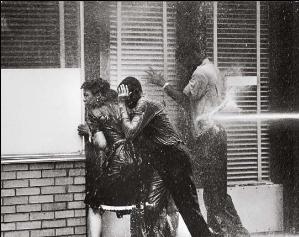
One of the most cowardly actions of the Birmingham police back in 1963 was when they used fire hoses and police dogs on innocent men, women and children. Connor found out that the Birmingham jail was full. On May 3, he changed police tactics. That was done in order for the police to keep the protesters out of the downtown business area. Another thousand students gathered at the church and left to walk across Kelly Ingram Park while chanting, "We're going to walk, walk, walk. Freedom ... freedom ... freedom." As the demonstrators left the church, the police told them to stop and turn back, “or you’ll get wet.” When they continued, Connor ordered the city’s fire hoses. They set them at a level that would peel bark off a tree or separate bricks from mortar to be turned on the children. Boys’ shirts were ripped off. Young women were pushed over the tops of cars by the force of the water. When the students crouched or fell, the blasts of water rolled them down the asphalt streets and concrete sidewalks. Connor allowed white spectators to push forward, shouting, "Let those people come forward, sergeant. I want 'em to see the dogs work." During this time, A.G. Gaston was on the phone with the white attorney David Yvann. He disagreed and was appalled at the use of children in the protest. He tried to negotiate a resolution to the crisis. When Gaston looked out the window and saw the children being hit with high-pressure water, he said, "Lawyer Vann, I can't talk to you now or ever. My people are out there fighting for their lives and my freedom. I have to go help them", and hung up the phone.
Black parents and adults who were observing cheered the marching students, but when the hoses were turned on, bystanders began to throw rocks and bottles at the police. To disperse them, Connor ordered police to use German shepherd dogs to keep them in line. James Bevel wove in and out of the crowds warning them, "If any cops get hurt, we're going to lose this fight." To the contrary, crooked police officers assaulting innocent black people are evil. Black people have every human right to use self-defense against terrorist cops assaulting innocent black men, women, and children. At 3 p.m., the protest was over. During a kind of truce, protesters went home. Police removed the barricades and re-opened the streets to traffic. That evening King told worried parents in a crowd of a thousand, "Don't worry about your children who are in jail. The eyes of the world are on Birmingham. We're going on in spite of dogs and fire hoses. We've gone too far to turn back." A battle hardened Huntley-Brinkley reporter later said that no military action he had witnessed had ever frightened or disturbed him as much as what he saw in Birmingham. 2 out of town photographers in Birmingham during that day were Charles Moore (he previously worked with the Montgomery Advertiser and was working for Life magazine) and Bill Hudson (with the Associated Press).
Moore was a Marine combat photographer who was "jarred" and "sickened" by the use of children and what the Birmingham police and fire departments did to them. Moore was hit in the ankle by a brick meant for the police. He took several photos that were printed in Life. The first photo Moore shot that day showed three teenagers being hit by a water jet from a high-pressure firehose. It was titled "They Fight a Fire That Won't Go Out". A shorter version of the caption was later used as the title for Fred Shuttlesworth's biography. The Life photo became an "era-defining picture" and was compared to the photo of Marines raising the U.S. flag on Iwo Jima. Moore suspected that the film he shot "was likely to obliterate in the national psyche any notion of a 'good southerner'." Hudson remarked later that his only priorities that day were "making pictures and staying alive" and "not getting bit by a dog." Right in front of Hudson was Parker High School senior Walter Gadsden.
The police officer grabbed Gadsden’s sweater and a police dog charged him. Gadsden had been attending the demonstration as an observer. He was related to the editor of Birmingham's black newspaper, The Birmingham World, who strongly disapproved of King's leadership in the campaign. Gadsden was arrested for "parading without a permit", and after witnessing his arrest, Commissioner Connor remarked to the officer, "Why didn't you bring a meaner dog; this one is not the vicious one." Hudson's photo of Gadsden and the dog ran across three columns in the prominent position above the fold on the front page of The New York Times on May 4, 1963. Television cameras broadcasted to the nation images and scenes of fire hoses knocking down schoolchildren and police dogs attacking innocent unprotected demonstrators. This coverage and photos shifted international support in favor of the protestors. Bull Connor was a villain. President Kennedy told a group of people at the White House that The New York Times photo made him "sick.” Kennedy called the scenes "shameful" and said that they were "so much more eloquently reported by the news camera than by any number of explanatory words." The images caused a great effect in Birmingham.
The black community had differences, yet black people solidified in support behind Dr. King. Horrified at what the Birmingham police were doing to protect segregation, New York Senator Jacob K. Javits declared, "the country won't tolerate it", and pressed Congress to pass a civil rights bill. Similar reactions were reported by Kentucky Senator Sherman Cooper, and Oregon Senator Wayne Morse, who compared Birmingham to South Africa under apartheid. A New York Times editorial called the behavior of the Birmingham police "a national disgrace." The Washington Post editorialized, "The spectacle in Birmingham ... must excite the sympathy of the rest of the country for the decent, just, and reasonable citizens of the community, who have so recently demonstrated at the polls their lack of support for the very policies that have produced the Birmingham riots. The authorities who tried, by these brutal means, to stop the freedom marchers do not speak or act in the name of the enlightened people of the city." President Kennedy sent Assistant Attorney General Burke Marshall to Birmingham to help negotiate a truce. Marshall faced a stalemate when merchants and protest organizers refused to budge.

Standoff
The Birmingham movement continued with courage by the protesters and activists. On May 5, 1963, a new era started. This was when black people in the area of Kelly Ingram Park used self-defense and act of rebellion against racist tyranny. Many spectators taunted the police. The SCLC leaders begged them to be peaceful or go home. James Bevel borrowed a bullhorn from the police and shouted, "Everybody get off this corner. If you're not going to demonstrate in a nonviolent way, then leave!" The racist Commissioner Connor was overheard saying, "If you'd ask half of them what freedom means, they couldn't tell you." To prevent further marches, Connor ordered the doors to the churches blocked to prevent students from leaving. On May 6, the jails were so full that Connor transformed the stockade at the state fairgrounds into a makeshift jail to hold protesters. Black people arrived at white churches to try to integrate services. They were accepted in Roman Catholic, Episcopal, and Presbyterian churches, but they were turned away at others. Some knelt and prayed until they were arrested by churches that turned them away.
Well known national figures arrived in Birmingham gave support to the protesters. Singer Joan Baez arrived to perform for free at Miles College and stayed at the black owned and integrated Gaston Motel. Comedian Dick Gregory and writer for the Nation Barbara Deming were both arrested. The young Dan Rather reported on this story for CBS News. The car of Fannie Flagg, a local television personality and recent Miss Alabama finalist, was surrounded by teenagers who recognized her. Flagg worked at Channel 6 on the morning show, and after asking her producers why the show was not covering the demonstrations, she received orders never to mention them on air. She rolled down the window and shouted to the children, "I'm with you all the way!" Birmingham’s fire department refused orders from Connor to turn the hoses on demonstrators again. They went through the basement of the Sixteenth Street Baptist Church to clean up water from earlier fire hose flooding. White business leaders met with protest organizers to try arrange an economic solution but said they had no control over politics. Protest organizers disagreed, saying that business leaders were positioned to pressure political leaders.

City Crisis or Paralysis
By May 7, 1963, the crisis continued. Breakfast in the jail took 4 hours to distribute to all the prisoners. 70 members of the Birmingham Chamber of Commerce pleaded with the protest organizers to stop the actions. The NAACP asked for sympathizers to picket in unity in 100 American cities. 19 rabbis from New York flew to Birmingham, equating silence about segregation to the atrocities of the Holocaust. Local rabbis disagreed and asked them to go home. The editor of The Birmingham News wired President Kennedy and pleaded with him to end the protests. Fire hoses were used once again, injuring police and Fred Shuttlesworth, as well as other demonstrators. Commissioner Connor expressed regret at missing seeing Shuttlesworth get hit and said he "wished they'd carried him away in a hearse." Connor is a callous, wicked male. Another 1,000 people were arrested, bringing the total to 2,500.
News of the mass arrests of children had reached Western Europe and the Soviet Union. The Soviet Union caused 25 percent of its news broadcast to cover the demonstrators. They sent much of the coverage to Africa (which is where the Soviets and the U.S. interests competed with each other). Soviet news people accused the Kennedy administration of neglect and inactivity. Alabama Governor George Wallace sent state troopers to assist Connor. Attorney General Robert Kennedy prepared to activate the Alabama National Guard and notified the Second Infantry Division from Fort Benning, Georgia that it might be deployed to Birmingham. No business of any kind was being conducted downtown. Organizers planned to flood the downtown area businesses with black people. Smaller groups of decoys were set out to distract police attention from activities at the 16th Street Baptist Church. Protesters set off false fire alarms to occupy the fire department and its hoses. One group of children approached a police officer and announced, "We want to go to jail!" When the officer pointed the way, the students ran across Kelly Ingram Park shouting, "We're going to jail!" Six hundred picketers reached downtown Birmingham. Large groups of protesters sat in stores and sang freedom songs. Streets, sidewalks, stores, and buildings were overwhelmed with more than 3,000 protesters. The sheriff and chief of police admitted to Burke Marshall that they did not think they could handle the situation for more than a few hours.

The Resolution
On May 8, 1963, at 4 am, white business leaders agreed to most of the protesters’ demands during the Birmingham movement. Political leaders held fast, however. The rift between the businessmen and the politicians became clear when business leaders admitted they could not guarantee the protesters' release from jail. On May 10, Fred Shuttlesworth and Martin Luther King Jr. told reporters that they had an agreement from the City of Birmingham to desegregate lunch counters, restrooms, drinking fountains and fitting rooms within 90 days, and to hire blacks in stores as salesmen and clerks. Those in jail would be released on bond or their own recognizance. Urged by President John F. Kennedy, the United Auto Workers, National Maritime Union, United Steelworkers Union, and the American Federation of Labor and Congress of Industrial Organizations (AFL-CIO) raised $237,000 in bail money ($1,830,000 in 2016) to free the demonstrators. Commissioner Connor and the outgoing mayor condemned the resolution. On the night of May 11, a bomb heavily damaged the Gaston Motel where Dr. King was staying at. He had left only hours before.
Another bomb damaged the house of Rev. A.D. King or Dr. Martin Luther King’s brother. When the police came to inspect the motel, they were met with rocks and bottles from neighborhood African Americans. The arrival of state troopers only angered the crowd. In the early hours of the mornings, thousands of black people initiated a historic rebellion in Birmingham, Alabama (which was long before the Watts rebellion in 1965). Many buildings and vehicles were burned. Many people were stabbed. By May 13, three thousand federal troops were deployed to Birmingham to restore order, even though Alabama Governor George Wallace told President Kennedy that state and local forces were sufficient. Martin Luther King Jr. returned to Birmingham to stress nonviolence. Outgoing mayor Art Hanes left office after the Alabama State Supreme Court ruled that Albert Boutwell could take office on May 21, 1963. Upon picking up his last paycheck, Bull Connor remarked tearfully, "This is the worst day of my life." Connor was an evil racist who didn't win. In June 1963, the Jim Crow signs regulating segregated public places in Birmingham were taken down.


Aftermath
The Birmingham Campaign changed everything in America and throughout the world. During the aftermath, desegregation existed slowly after the demonstrations. Some people criticized Dr. King and the SCLC for ending the campaign too soon, for making the vague promises, and for settling less than even moderate demands. In fact, Sydney Smyer, president of the Birmingham Chamber of Commerce, re-interpreted the terms of the agreement. Shuttlesworth and King had announced that desegregation would take place 90 days from May 15. Smyer then said that a single black clerk hired 90 days from when the new city government took office would be sufficient. In July of 1963, most of the city’s segregation ordinances had been overturned. Some of the lunch counters in department stores complied with the new rules. City parks and golf courses were opened again to black and white citizens. Mayor Boutwell appointed a biracial committee to discuss further changes. Yet, no hiring of black clerks, police officers, and firefighters had yet been completed and the Birmingham Bar Association rejected membership by black attorneys. The whole campaign caused national and international attention to the racist violence in Birmingham. There was a meeting among Attorney General Robert F. Kennedy, James Baldwin, and other Black leaders to talk about racial issues. Dr. Martin Luther King Jr.’s reputation increased massive after the protests in Birmingham. Many people lauded him as a hero. During the summer of 1963, Dr. King and many men and women led the March on Washington for Jobs and Freedom. He gave his historic speech entitled, “I Have a Dream.” Dr. King became Time’s Man of the Year for 1963 and won the Nobel Peace Prize in 1964. John F. Kennedy acted too. After the Birmingham Campaign, George Wallace’s refusal to admit black students to the University of Alabama caused President Kennedy to address the nation in his own historic speech on civil rights on June 11, 1963. In his speech, JFK addressed the inequalities between black and white Americans. He said the words of, “The events in Birmingham and elsewhere have so increased cries for equality that no city or state or legislative body can prudently choose to ignore them.”
Despite the apparent lack of immediate local success after the Birmingham campaign, Fred Shuttlesworth and Wyatt Tee Walker pointed to its influence on national affairs as its true impact. President Kennedy's administration drew up the Civil Rights Act bill. After being filibustered for 75 days by "diehard southerners" in Congress, it was passed into law in 1964 and signed by President Lyndon Johnson. The Civil Rights Act applied to the entire nation, prohibiting racial discrimination in employment and in access to public places. Roy Wilkins of the NAACP, however, disagreed that the Birmingham campaign was the primary force behind the Civil Rights Act. Wilkins gave credit to other movements, such as the Freedom Rides, the integration of the University of Mississippi, and campaigns to end public school segregation. Medgar Evers was murdered in June 12, 1963 outside of his home. He was organizing demonstrations, which were similar to Birmingham, to pressure Jackson, Mississippi’s local city government. In September 1963, Birmingham’s public schools were integrated. Governor Wallace sent National Guard troops to keep black students out but President Kennedy reversed Wallace by ordering the troops to stand down. Violence continued to plague the city, however. Someone threw a tear gas canister into Loveman's department store when it complied with the desegregation agreement; twenty people in the store required hospital treatment. Four months after the Birmingham campaign settlement, someone bombed the house of NAACP attorney Arthur Shores, injuring his wife in the attack. On September 15, 1963, Birmingham again earned international attention when Ku Klux Klan members bombed the 16th Street Baptist Church on a Sunday morning and killed four innocent young black girls. Their names are Addie Mae Collins, Carole Robertson, Cynthia Wesley and Denise McNair. The Birmingham campaign inspired and grew the Civil Rights Movement in many parts of the South plus nationwide. In 1965, Shuttlesworth assisted Bevel, Dr. King, and the SCLC to lead the Selma to Montgomery marches, intended to increase voter registration among black human beings.

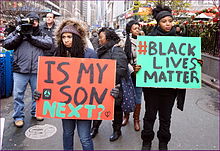

The Struggle Continues
The struggle continues. After the Birmingham movement, more radical changes existed in America and in the world. The March on Washington existed which called for civil rights laws, decent housing, full and fair employment, and other progressive policies. The 16th Street Baptist church was bombed by a racist coward. Also, there was the evil assassination of President John F. Kennedy in November 22, 1963. The new President was Lyndon Baines Johnson who supported Kennedy’s legislative agenda. Dr. Martin Luther King Jr. also worked in the St. Augustine movement. St. Augustine was a very old city and it is found in the northeast coast of Florida. It was founded by the Spanish in 1565. Dr. Robert B. Hayling was a black dentist and Air Force veteran (who had ties to the NAACP) who protested segregated local institutions since 1963 in the city. Many civil rights leaders like Dr. Hayling and three companions, James Jackson, Clyde Jenkins, and James Hauser, were brutally beaten at a Ku Klux Klan rally in the fall of that year of 1963. Nightriders shot in black homes constantly in St. Augustine. Many people were arrested for sit ins. Some were teenagers like Audrey Nell Edwards, JoeAnn Anderson, Samuel White, and Willie Carl Singleton (who came to be known as "The St. Augustine Four"). It took a special action of the governor and cabinet of Florida to release them after national protests by the Pittsburgh Courier, Jackie Robinson, and others.
Many black people in St. Augustine used armed self-defense and nonviolent direct action to fight for justice. In June 1963, Dr. Hayling publicly stated that "I and the others have armed. We will shoot first and answer questions later. We are not going to die like Medgar Evers." The comment made national headlines. When Klan nightriders terrorized black neighborhoods in St. Augustine, Hayling's NAACP members often drove them off with gunfire, and in October, a Klansman was killed (in self-defense). By 1964, Dr. Hayling and the other activists urged the SCLC to come to St. Augustine. They did. They worked in the spring of 1964. People fought for freedom. Dr. King was arrested in Florida. He sent a “Letter from the St. Augustine Jail” to a northern supporter, Rabbi Israel Dresner of New Jersey, urging him to recruit others to participate in the movement. This resulted, a week later, in the largest mass arrest of rabbis in American history—while conducting a pray-in at the Monson. There was a settlement in St. Augustine. Later, the Freedom Summer event came in 1964, which promoted voting and social rights for black people in Mississippi. The Civil Rights Act was passed in July 4, 1964, there was the election of 1964 (including the Mississippi Freedom Democratic Party with Ella Baker and others being disrespected by the Democratic Party establishment. Dr. King opposed Barry Goldwater), and Dr. King won the Nobel Peace Prize in December 10, 1964. These events represent the transitional phrase of the movement from the early age to the later age of the modern civil rights movement. In January of 1965, black players of the American Football League boycotted New Orleans, because of discrimination. The AFL All-Star Game was moved into Jeppesen Stadium in Houston. By 1965, the Selma Rights movement came and the fight for voting rights persisted in America. Malcolm X continued to be revolutionary in his life by early 1965 too. So, the events of the past influence our current movement for justice in 2017 and beyond.
By Timothy
Subscribe to:
Posts (Atom)